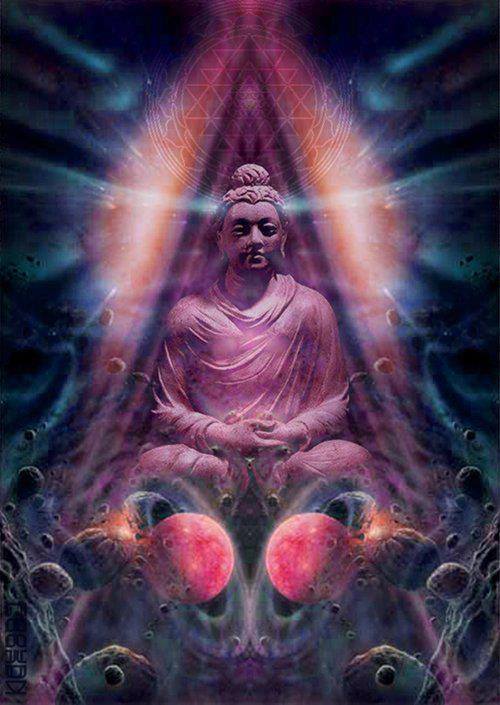
The spiritual path is the path of the ordinary hero, and it sees the world very differently to the outlook that is promoted by pure science. The entire spiritual journey is one in which the individual learns by degrees to see and read the world as an all-nurturing miracle of guidance in which we have a role as co-creators. It is a path that teaches us – deeply, deeply teaches us – that the state of no effort is our greatest strength, for it is also the seamlessly integrated state of Being that enables us to harmonize with the strength of the world. Eventually that teaching leads us to the understanding that the world itself is enlightened; to join the world is to die to the endarkened ego and give yourself to the supreme light of intelligence all around you. Enlightenment is not something any individual can possess, any more than someone could possess the Logos or Buddha consciousness. Spiritual enlightenment in an individual is nurtured by a profound dissolution of the anxiety that separates us from the world, so that we can at last join it, seeing and understanding “the real as the play and work of love”, as Andrew Harvey put it.
To join the enlightened world is to awaken to a place of ceaseless renewal and revelation; a place of companionship in which you are fully known in everything you do, even as you sensationally discover and serve the world in everything you do; a place in which alienation and existential isolation are seen to be creaky illusions, because in fact you know yourself to be an indivisible part of all Being, intimately and companionably sustained by it; a place in which endless gifts arise from the deep mystery that suffuses everything ordinary.
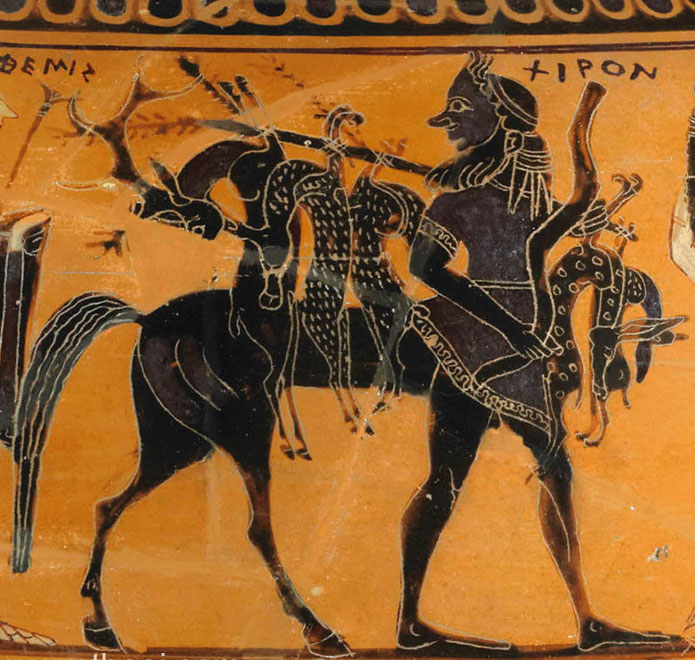
In the ancient mythological world of Greece there existed a Thessalian tribe of chimeric kentauroi, or centaurs -creatures who were half human and half horse. They were generally a savage and untamable lot, but one among them, Chiron, son of the Titan Cronus, was exalted and recognized as having special status as possessing insight, knowledge and wisdom. The wisest and most just of all centaurs, he was also known to be a skilled healer of remarkable ability and was sought as a physician and teacher of the medical arts by the likes of Heracles, Achilles and Asclepius. Chiron is specifically known for a severe injury he received whilst in battle with Heracles where he was accidentally shot with a poisoned arrow. For mere mortals the poison, coming as it did from the Hydra, meant certain and immediate death. However, being the spawn of a Titan meant he was an immortal. So Chiron was condemned to live on, though having to endure the incessant agony of his unhealable injury. He is still recognized to this day in Western astrological systems and he symbolizes the archetype of the ‘wounded healer’.
I doubt that there is a single gifted healer who is truly called to the healing path who cannot identify with this motif. Indeed, as healers we are called upon with a unique urgency to find our own journey of self-inquiry through seeking and addressing the deepest wounds we have received, both in this life as well as previous ones. Not only do we discover a most profound type of intimacy with ourselves but we also come into contact with the very root of what it means to be wounded, to be abused or broken by this path of being human; and by doing so we also touch upon the meaning and fragility of mortality. As with Chiron, it also brings us to the heart of an existential dilemma…
Ultimately, one who attains spiritual liberation heals the deepest wounds of all.
Accessing and working with our own wounds gives us a self-knowledge that is primarily experiential and it provides a number of significant effects. One is that we have the opportunity to come to know the nature of illness or disease at the vibrational/intuitive level which gives us a kind of sensing that aids and supports assessing medical conditions that may otherwise only be done through rational or suppositional thought processes. Without the ability to ‘feel’ the disease, knowledge becomes theoretical and abstract. It may well be effective but it is nonetheless superficial. Another effect is that as we come to appreciate the vulnerability of being alive, we thereby have the opportunity to develop profound compassion for others who are being challenged on their own healing path. Without the ability to identify as self with a client (either quite literally or at the very least, by extension) we run the risk of mere objectification. Therefore, the effect we may have on those we seek to help will again be at the surface, as if simply treating and abating symptoms is sufficient.
Furthermore, there is a kind of angst that is innate to existence and most people go through their entire lives avoiding it or, worse, never becoming aware if it in the first place, such is the degree of ignorance and distraction within which we find ourselves -these so-called modern times. Our ability to know ourselves is based in that organ of reflexive self-awareness and expression, which here we will provisionally call an ego. The ability to know the difference between I and you is central to the function of the ego. Furthermore, the ego is also the way by which we express agency and thereby map and plan out our course through life. But the marriage of this awareness and the ability to make abstractions about the future comes at a terrible cost -that, ultimately, is the knowledge of mortality and death. Having no mere insignificant vested interest in self-preservation the ego positions itself in such a way as to model and predict life so as to optimize survival while at the same time adroitly side-stepping having to come to terms with the the ultimate wound; the inevitability of death. For the ego the possibilities boil down to ending tenure in annihilation, insanity, or death. Since none of these are acceptable options the ego will forever avoid them (often nonchalantly, the master magician and past master of misdirection)… sometimes aggressively (through addictions or other forms of obsessive-compulsive behaviors). All the while our avoidance mechanisms sweep a compounding anxiety of that inevitable fate underneath the proverbial rug.
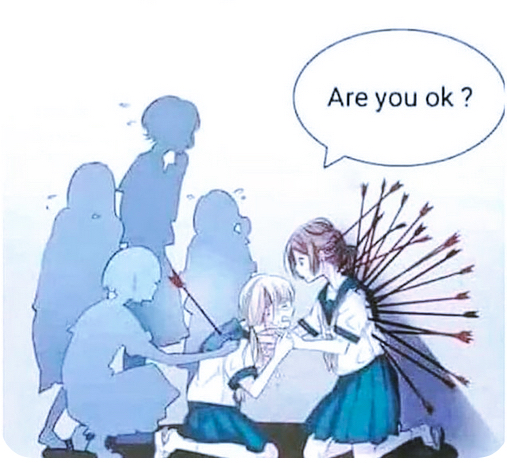
Central to the Mahayanist Buddha Dharma is the notion of the Bodhisattva -a being who forsakes his or her own ultimate emancipation in order to be of compassionate service to others, ultimately to the point of forestalling complete enlightenment until all other beings are themselves enlightened. From the Buddhist perspective, the very nature of being embodied in a material dimension entails ‘struggle’ and is therefore a realm where suffering is intrinsic to existing. Chiron’s unhealable injury can be seen metaphorically as the suffering endemic to human life. In Chiron’s case, this struggle is made even worse for he is the master healer who is possessed of an intractable malady. The agony of his wound is inseparable with his existence, compounded by the fact that, despite his mastery as a physician, as an immortal his fate was apparently cast to suffer without end. For us normal people this predicament appears outrageous indeed, yet as mortals we all face our individual (sometime collective) poisoned arrows. Life crushing illness is a reality for many. There are numerous pathologies such as trigeminal neuralgia (known as the ’suicide disease’), TMJ, burn victims, and untreatable cancers which cause unimaginable pain, and from which death is a welcome release.
One of lessons embedded in Chiron’s archetype is that there is no excuse for not taking our art to the highest levels. At the same time we should not overlook that Chiron finally resolved his predicament and chose to forsake his immortality. Zeus honored him and placed him amongst the stars as the constellation Centarus, or Sagittarius as we call it today. Seeing that kind of beauty interwoven with tragedy is germane to the Greek way of seeing life. We all have potential to master and share great gifts, yet there are are limits to what we can not only do but, ultimately, endure. How that plays out is up to us, each to their relative capacity to perceive, understand, serve, endure and ultimately transcend. These processes of self-exploration can be honed to a fine edge through the Buddhist heuristic. Through the Dharma, the existential dilemma resolves in the now, and this brings us to the notion of addressing the deepest wounds of all: being confronted with insanity, annihilation, or the purity of the destruction of death. Not every client interaction is life and death, but spend enough time in service and you will inevitably come face to face with the most challenging issues of being alive. The depth and degree of how you address your own challenges will determine your capacity to be of genuine service to others. Ultimately, one who attains spiritual liberation heals the deepest wounds of all. Chiron transcended his dilemma through death. But if, like the Buddha, such a being were able to do so and still walk the Earth, that healing would be spread out like ripples over a vast ocean of space and time, ultimately touching and easing the suffering of uncountable others. May it be so.
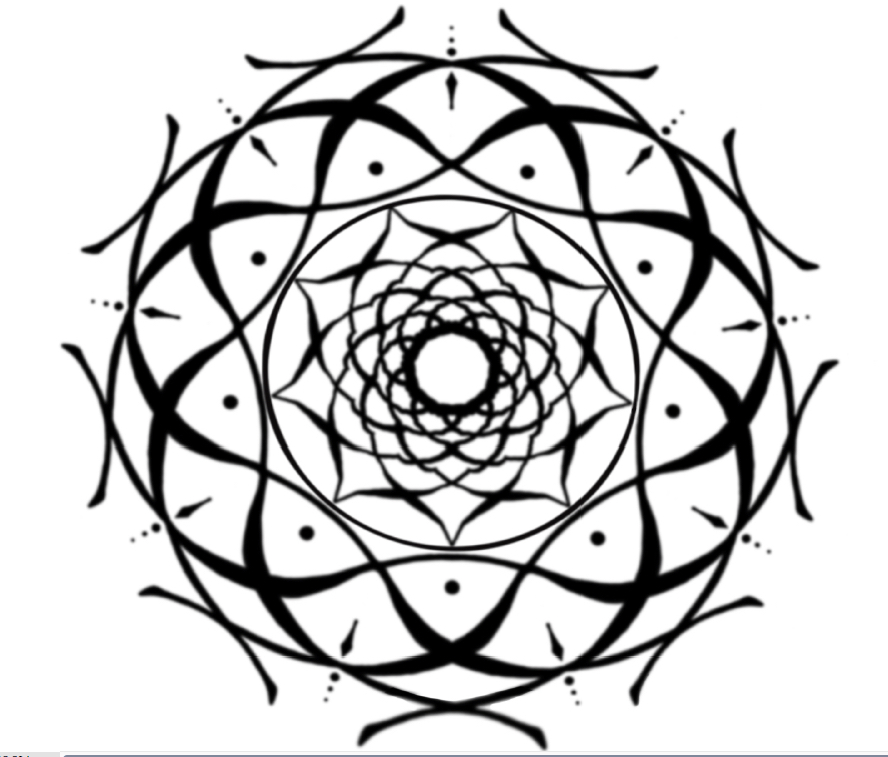
After doing up-wards of one thousand iterations of logo designs I finally narrowed it down to a few, and finally to the present design. It obviously needed the standard utility functions of a logo, but also I needed it to incorporate a number of visual/conceptual notions within its meta.
Like mandalas based on sacred geometry the center point is the bindu, focal point/particle which functions as the infinitesimal portal to and from the Ultimate Source. Emanating from that is the cosmic web, the skein of interconnected and interpenetrating gross, subtle and mysterious phenomena that form Indra’s net, the holographic multiverse and dream catcher that was sung into existence at the time of the Great Singing.
The circle around that connotes the transition between discrete phase-shifts. In the next dimension of the expansion we find the nine-based nodal structure, a la Nikola Tesla’s admonition to seek the mysteries of the universe within the numbers 3, 6, and 9. Three is the sacred trinity, Norse triskelion, and the Daoist cosmological polarity (plus neutrality). Six is the base of the Seed of Life and the root progression of Sacred Geometry… but nine -now there is a mystery. The outer pattern shifts back and forth between winding DNA strands (the code of all Life as we know it) and the super-symmetrical lobes of a Peyote cactus. Each strand terminates as an unbounded extension into the meta. This is symbolic of the open-ended potential of an infinitely creative system that is self-organizing, self-reflective and hyper-conscious.
This logo, the symbol of my life’s work, is consecrated with compassionate benedictions and the sincere wish that all beings are lead along the path of understanding, wisdom and ultimate liberation. I pray that it spreads far and wide within the collective, working on the gross, subtle and mysterious levels to heal, inspire and awaken all beings.
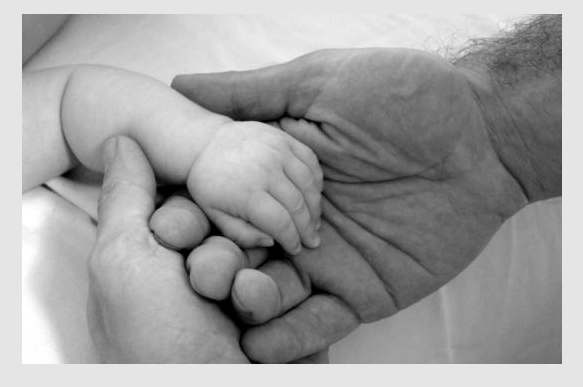
“Without adequate tactile input, the human organism will die. Touch is one of the principal elements necessary for the successful development and functional organization of the central nervous system, and is vital to our existence as food, water, and breath.
Our genetic blueprints are only the starting point of our individual development. The kind of conditioning we receive and the kinds of conscious choices we make play tremendous roles in our physical growth, our acquisition of skills, our health and maturity, and our aging.
All our body’s tissues are, then, a great deal more “plastic” and responsive to change and improvement throughout our lifetimes than we normally assume. Far from being “fixed” and “determined” by our biological inheritance, we are all still “works in progress.”
There is no sensation or emotion that is not translated into a muscular response of some kind; these feeling states are the primary bases of our habitual postures and our individual patterns of behavior.
Bodywork, by using tactile input, can actually re-educate and re-program the organism into becoming more coordinated, more flexible, and more appropriately responsive – literally more “intelligent”. A body/mind system that is integrated in this fashion will be more able to resist depression or disease, more able to attend to and repair itself in times of stress or injury.
Various ancient and contemporary forms of bodywork go far beyond temporary pleasure or relief and actually alter conditioned responses, chemical balances, and structural relationships. That is, bodywork has the potential to deeply change and improve the given state of an individual.
Nothing is more essential to lasting positive change than self-awareness; it is the prerequisite for self-control. Bodywork is a direct and effective way to increase this awareness within an individual.”
~ Deane Juhan
The psoas major muscle is often referred to as the deepest core, or by some, the muscle of the soul. This core-stabilizing muscle affects mobility, structural balance, joint function, flexibility, and much more. In addition to its function to help keep the body upright and moving, the psoas is believed to allow you to connect with the present moment especially when it is stretched out and tension is released from the body.
There is a lot more to the psoas than one might initially think. A healthy and well integrated psoas may be vital to not only our structural health but our psychological wellbeing as well. Some therapists and yogins believe that the psoas embodies our deepest urge for survival, and more profoundly, our elemental desire to flourish. By keeping the psoas vital and integrated we are able to harness healing pranic energy and improve physical, mental, and spiritual health.
Where is the Psoas?
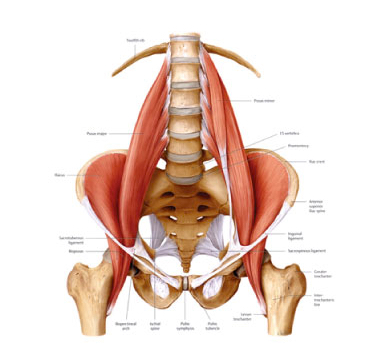
In addition to being one of the principal muscles associated with vertical physical stability, the psoas is involved in initiating stepping moments of the leg, and can be retroactively involved in respiration. The posts stretches from the ventral surface of the spinal column to the upper part of the medial femur head. It is the only muscle connecting the legs to the spinal column. The muscle flares out from the T12 vertebrae, follows down from attachments to the five lumbar vertebrae before attaching to the inner surface at the top of the thigh bone. Another segment of the psoas attaches along the inner surface of the pelvic bowl and extends down to connect with the bands running from the lumbar vertebra.
In addition to connecting the legs and spine, the psoas is connected to tendonous segments of the diaphragm (the muscular structure which is responsible for modulating breathing). This central core part of the body is the upper boundary of the gut and the enteric nervous system. It is sometimes called the Solar Plexus, or in the yoga traditions, the manipura chakra.
There are direct structural and energetic links between the psoas and the most ancient parts of our brain stem and spinal cord, sometimes referred to as the reptilian brain. These primeval cortical structures are responsible for regulating survival drives and automatically maintaining essential core functioning which in turn ensures the vitality and living integrity of the organism. Considering not only the location of these structures but their functions as well, it is not difficult to understand why the many physical symptoms associated with fear and anxiety manifest here. The way most humans live today (constantly rushing, defending, competing and achieving) can result in locking the psoas into a constant state of “fight or flight”. This situation is exacerbated by many things in our modern lifestyle including car seats, constrictive clothing, chairs, footwear that distorts gait and standing posture. In fact any impediment that curtails our natural movements can contribute to constricting and impeding our psoas muscles.
This lifelong chronic stress put on the psoas can lead to many problems like back, hip, or knee pain, and even digestive issues and dysfunctional breathing. It could also be a major cause why people suffer from chronic physical pain.
The physical body is not the only part of you that suffers from a chronically-stressed psoas. The psoas is much more than a muscle used for structural stability. It influences every element of life, from how you feel, to how you look at the world, and even how you treat others.
A variety of problems have been associated with a chronically-stressed psoas muscle: it can negatively affect your emotional state; it can impact your interpersonal relationships; and it can influence your general contentment with life. Awareness that a healthy psoas is important to emotional wellness, as well as physical health, is the first step towards ensuring that we give this muscle the attention it deserves.
Fear And The Psoas
Fear is an emotion that manifests itself in the most unusual ways and can “lock” itself into the body resulting in both physical and emotional tension as well as a constellation of dysfunctional symptoms. Because the psoas is closely linked to our “fight or flight” mechanism, fear can be over-represented in those with a constricted psoas. By restoring balance to your psoas muscles, you are likely to release this pent up tension, which can have a profound effect on releasing unfounded fearfulness about life, and thus improve both your physical and mental wellbeing. Along with fewer muscle aches and strains you will feel a greater sense of ease and inner peace.
Lengthening and releasing your psoas grounds you and allows you to connect with the healing and revitalizing energy of the Earth. This also allows you to balance your pranic energy and enabling you to feel more present in the moment. Proper structural stability attributed to a healthy psoas allows for an unimpeded flow of prana throughout the body which results in a proper distribution of vital energy. In the physical sense, when the body can properly support itself movement is less-restricted and requires less effort, thus leaving you more energetic.
In short, it is clear that the psoas is an important, yet often unknown, muscle that plays a vital role in physical health and mental well-being. The cumulative effect of neglecting this muscle is physical and mental stress and tension, which manifests itself in our society as anxiety, depression, chronic back pain, knee pain, digestive distress, respiratory problems, etc.
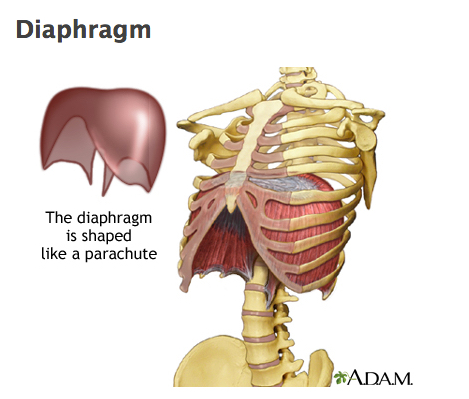
Ever wonder how air actually gets inside of your lungs? Take a long hard look at this. Then take a nice long slow breath. Let this image inform your sense of motion, gentle exertion and expansion. If you are like most people I work with, this won’t make any sense, as your respiratory reflex either was imprinted to you incompletely or was arrested by trauma or distorted developmental processes. I am continually amazed at how athletes, dancers and yogis have such distorted and incomplete breathing capacity, and this is one of the main reasons that I teach breath and require clients to engage in a deep, rhythmic, diaphramatic breath while on the massage table. This is essentially what ‘holotropic’ massage means and I will be posting more about this as time goes on. Meanwhile, do your own self-study and explore breathing to your fullest degree. It will change your life for the better -I absolutely guarantee it!!!
An older friend of mine is having health problems that are affecting his motory cortex and it is disrupting his ability to stand and walk. Seeing his difficulties reminds me of how important it is to have balance. Having equilibrium is essential. All of our life-support systems depend on balance, whether it is blood pressure, emotional well-being or the delicate balance between sodium and potassium inside all the fibers of our nervous system. Most of those systems run in the background and we really don’t appreciate them until they start to break down or are disrupted. Isn’t what we call ‘health’ simply a state where all the components of our organism are in a state of balance? Pay special attention to the ways that your mind and body need balance. Without it we cannot undertake the great work of awakening.
This is a video I recently watched that explores the differences between existence and subjective experience in the 3rd, 4th and 5th vibrational dimensions. For anyone who is engaged on path and finds perspective on these differences helpful, this video may be worth watching [https://www.youtube.com/watch?v=RW75MaUS1lY]. Peace.3rd, 4th, & 5th Dimensional Consciousness
 transform-bodywork.health.blog